Is it Supposed to Feel This Hard?
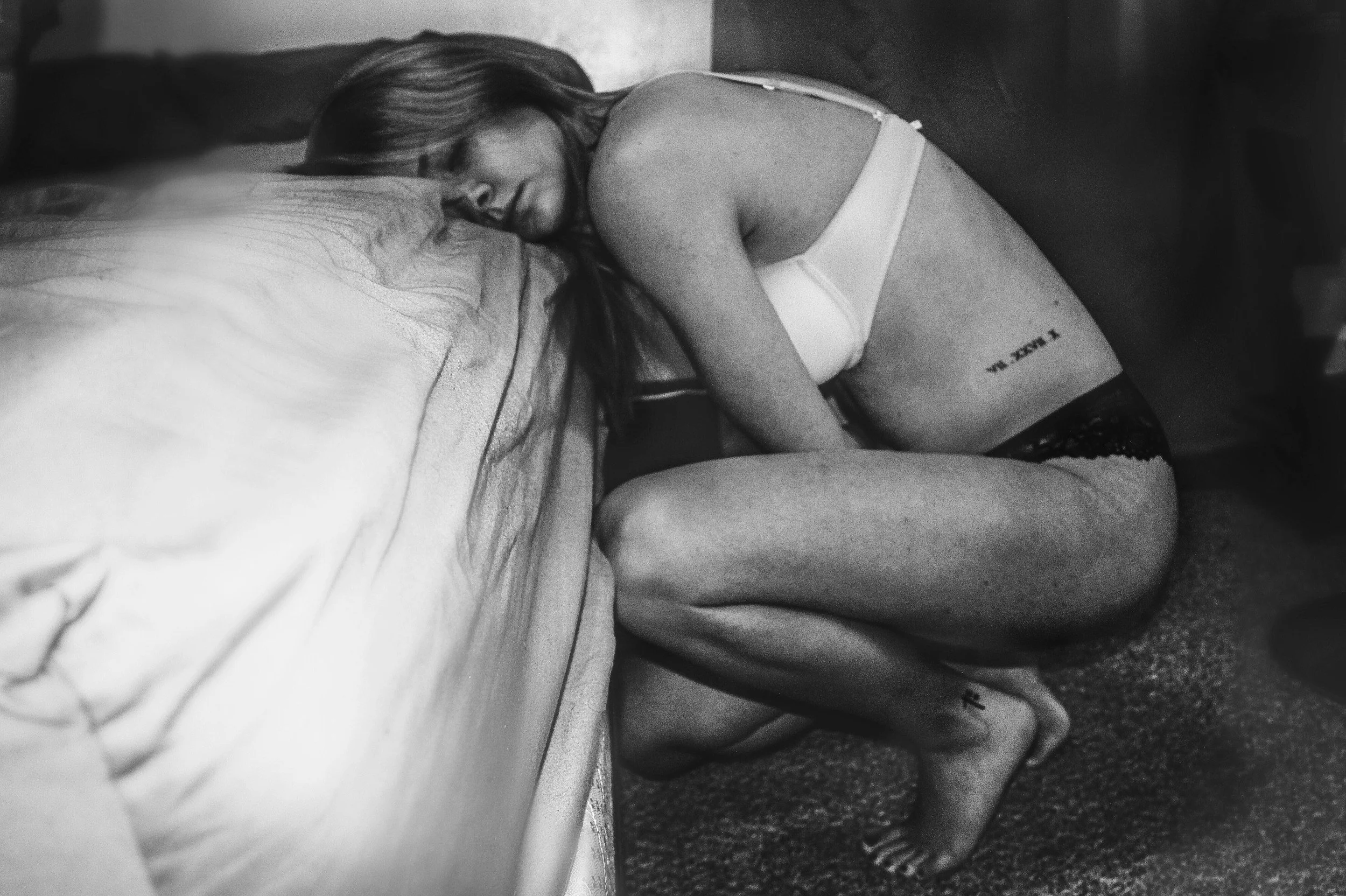
There's a moment that a lot of new mothers know. It's maybe week three or four. Your partner has gone back to work. The house is quiet in a way that doesn't feel peaceful. The baby is fed and sleeping, and you are sitting there, exhausted, anxious, and wondering why no one told you it would feel like this.
That was me, after my first baby.
We were new to the area, we had no family nearby, and my maternity leave was self-funded. My husband went back to work four weeks after our daughter was born, and I was alone in a house in a city where I didn't really know anyone. With my husband, I had made a choice, consciously, even proudly, to keep it to just us for a while. To protect our little bubble and figure out how to be a family.
What I didn't realize at the time was that I was also choosing isolation.
I was anxious nearly all of the time. I was afraid to take the baby out. I didn't know what support even looked like, so I didn't know to look for it. I thought the way I was feeling — the overwhelm, the loneliness, the quiet sense that I was failing at motherhood — meant that the problem was me.
It wasn't until my second pregnancy that I understood what had been missing. That time, I did things differently. I prepared for postpartum. I let people in, and I built my own idea of support. I still had to recover physically. I still had to get to know a new tiny person, and integrate her into our family. I still had to parent an older child who had been used to being the only child. But I wasn't doing it alone, and I finally had language for what I was moving through.
That shift — the one that comes with becoming a mother, the one that touches every part of who you are — it has a name: matrescence. If you’ve had a baby, you’ve probably moved through this without even knowing it, or even knowing it was coming.
I believe that the reason so many new mothers feel isolated and like failures isn't because they're doing something wrong, it's because most of us never watched another woman move through this shift out loud. Our mothers, our aunts, our neighbors — they were doing it too, but it was quiet. It was hidden. Likely, they didn’t have language for it either. We just arrived at our own postpartum with no map and no village, and it wasn’t because we didn't deserve one, but because no one passed one down.
That cycle is what I want to help break.
The work I do with new mothers is rooted in that belief. I don’t help new mothers fix anything, because you’re not broken. Rather, I help you name what you're experiencing, trust what you already know, and build something around you that holds you up as you grow as a mother.
In practice, that looks like slowing down enough to trust yourself. It looks like learning to ask for help before you're desperate. It looks like building a community of people who will be there for you. And it looks like being the village for someone else someday, and teaching your children that this is how we do it. Not hidden in silence, but out loud and supported.
That's the part that matters most to me. Not just that you feel better, though I so want that for you but that the support doesn't stop with you.
This work might be right for you if:
You're in the thick of early motherhood and something feels harder than you expected. You feel like you should be happier, or more grateful, or more together — and you're not sure why you're not. Maybe you had a hard first postpartum and you're determined to do your second differently. Maybe you're still in it and you've realized you can't keep going the way you've been going.
You don't have to have hit a low to deserve support. But if you did, you're not alone — and it's not too late.
If any of this feels familiar, I'd love to talk. Book a free discovery call here.
